
Board Brief
October 2026
Designed for Club Board of Directors

Inside this Issue:
-
Insights: Managing Complexity in Private Clubs: A Renewed Board Imperative
Private clubs are not immune to the rising operational complexity affecting the broader US economy. In many ways, the pressure is amplified. -
By the Numbers: How Amenities Impact Finance & Operations
Using data from the CMAA Club Finance and Operations Survey, reflecting July 2024-July 2025 and powered by Club Benchmarking, this edition explores the impact of the facility expenses on club finances. -
Best Practices: Points of Focus
Five points of focus should be on every club manager’s to-do checklist whether he or she is responsible for the finest or most down-to-earth club. -
External & Governmental Influences: EPA Publishes Supplemental Waters of the US Rule
In early September, the US Environmental Protection Agency (EPA) in conjunction with the US Department of the Army proposed a supplemental update to the Waters of the US rule. -
CMAA News & Announcements: Upcoming Virtual Education Opportunity
Great club governance doesn’t happen by accident—it’s driven by intentional action. It requires deliberate focus and consistent investment from the club executive and the Board of Directors. Get started on November 19.

Insights
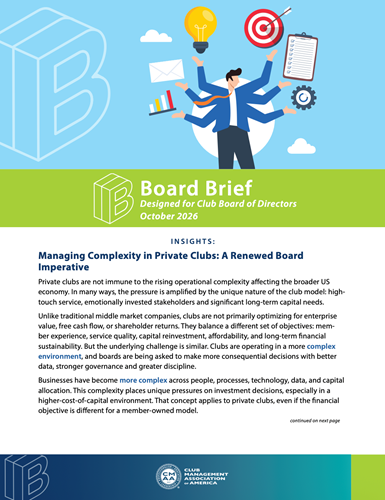
Managing Complexity in Private Clubs: A Renewed Board Imperative
Private clubs are not immune to the rising operational complexity affecting the broader US economy. In many ways, the pressure is amplified by the unique nature of the club model: high-touch service, emotionally invested stakeholders, and significant long-term capital needs.
Unlike traditional middle market companies, clubs are not primarily optimizing for enterprise value, free cash flow, or shareholder returns. They balance a different set of objectives: member experience, service quality, capital reinvestment, affordability, and long-term financial sustainability. But the underlying challenge is similar. Clubs are operating in a more complex environment, and boards are being asked to make more consequential decisions with better data, stronger governance and greater discipline.
Businesses have become more complex across people, processes, technology, data, and capital allocation. This complexity places unique pressures on investment decisions, especially in a higher-cost-of-capital environment. That concept applies to private clubs, even if the financial objective is different for a member-owned model.
Private Clubs’ Unique Environment
For clubs, complexity is showing up in several practical ways. Amenities have expanded well beyond golf and dining, with many clubs now operating multiple food and beverage outlets, racquet sports, fitness, wellness, youth programming, aquatics, events, and more personalized member services. That broader operating model puts direct pressure on labor and the member experience.
Clubs compete for many of the same culinary, service, recreation, and hospitality workers as restaurants and hotels, but members often expect a higher level of consistency, familiarity and personal service. According to the US Bureau of Labor Statistics, average hourly earnings in leisure and hospitality are well above the pre-pandemic wage base, while the sector’s quit rate remains elevated relative to the broader labor market.
For clubs, the significance is clear: Labor costs have gotten higher, and retaining trained employees has become central to protecting the member experience. Recruiting, training, scheduling, and service consistency are no longer just operating issues; they are core parts of the club’s long-term value proposition.
Technology adds another layer. Clubs are using data more effectively across member usage, dining performance, labor scheduling, tee sheets, racquet utilization, capital planning, and member engagement. Technology also has value beyond better reporting; for some clubs, targeted investment in systems and automation can reduce administrative burden, improve labor deployment, and support more efficient operations over time. But many clubs still struggle with basic questions of what data to collect, how to analyze it, and how to use information to influence board decisions.
The traditional enterprise value roadmap needs to be reframed as a club value roadmap.
Areas of Focus
For a club, the relevant operating levers are not just sales, operating expenditures, and investment. They are the club’s revenue model, service model, and capital model.
The revenue model asks whether revenue from dues, initiation fees, capital dues, assessments, food and beverage, golf, racquet sports, events, and other ancillary sources is sufficient to support the services members expect.
The service model addresses whether the club is delivering the desired member experience in a financially sustainable way. Considerations include labor, benefits, training, retention, amenity utilization, course conditions, programming, management structure, and technology-enabled efficiency. The model also includes the economics of subsidized amenities, particularly food and beverage, where many clubs intentionally operate at a loss because dining is part of the member value proposition and supported by dues.
The capital model asks whether the club is allocating capital toward the projects that best support long-term member value, with a focus on retaining existing members and attracting the next generation of members. Considerations include deferred maintenance, reserve funding, debt capacity, assessment tolerance, clubhouse investment, golf course infrastructure, fitness, wellness, racquet sports, pools, technology, and equipment.
The key output is not free cash flow. It is sustainable funding capacity.
The board-level issue is whether the club can fund operations, maintain service levels, reinvest in facilities, manage debt and avoid surprise assessments while preserving the value proposition members expect.
This has become harder since the post-pandemic club boom. Many clubs benefited from elevated demand, waitlists, and initiation fee growth. But lower member churn can also reduce the recurring inflow of initiation fees, making capital planning more dependent on dues strategy, reserves, assessments, and debt capacity. At the same time, higher borrowing costs have raised the stakes for every major project.
The core board question is no longer “Can we afford this project?” It is “Does this investment fit our long-term value roadmap?”
This new focus requires clubs to connect member demand, usage patterns, service expectations, labor realities, capital needs, and governance discipline into one decision-making framework. That framework should also reflect the club’s brand, member profile and financial philosophy, because not every club pursues the same value proposition.
In an environment where complexity is unlikely to decline, the clubs that perform best will be those that simplify the right things: clarifying priorities, strengthening data and digital capabilities, aligning capital with strategy, and measuring success against long-term member value.
The takeaway: For private clubs, complexity is now a governance issue. The clubs that manage it well will be better positioned to protect the member experience, fund the future, and remain financially sustainable.
Insights by Chris Cecil, RSM US LLP.

By the Numbers
How Amenities Impact Finance & Operations
From July 2024-June 2025, CMAA and Club Benchmarking collected data from more than 1,200 clubs for the 2024 Club Finance and Operations Survey. In this edition of Board Brief, we’ll explore the impact of the expenses around amenities on club finances.
Sports and Recreation
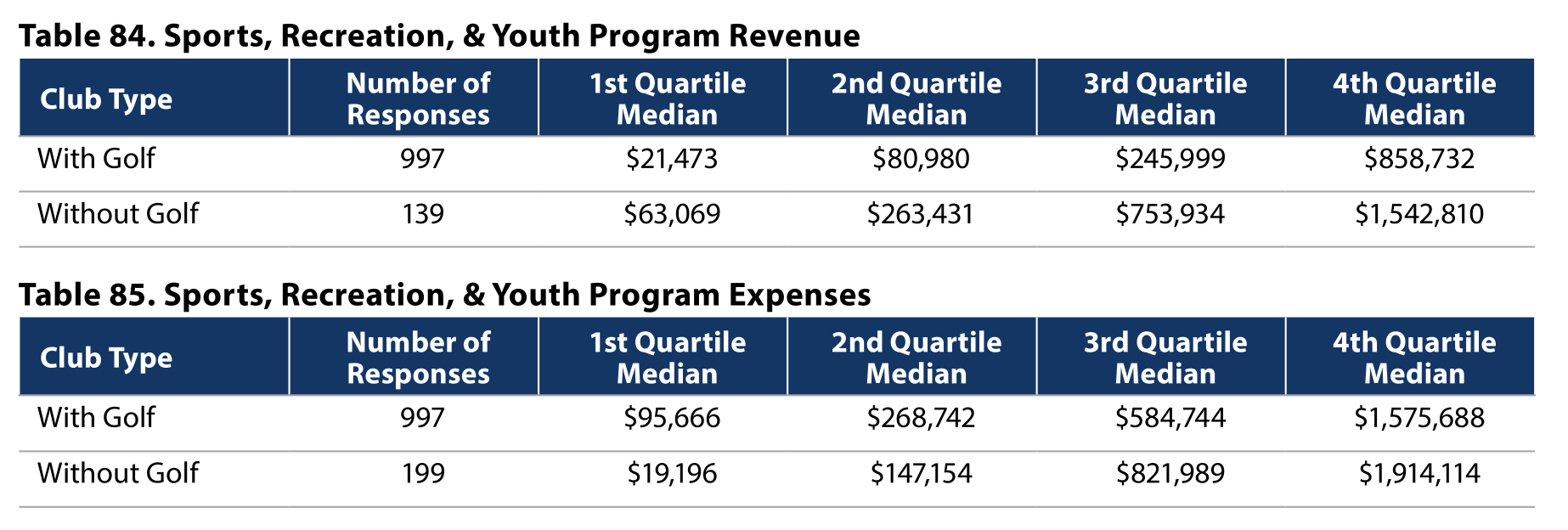
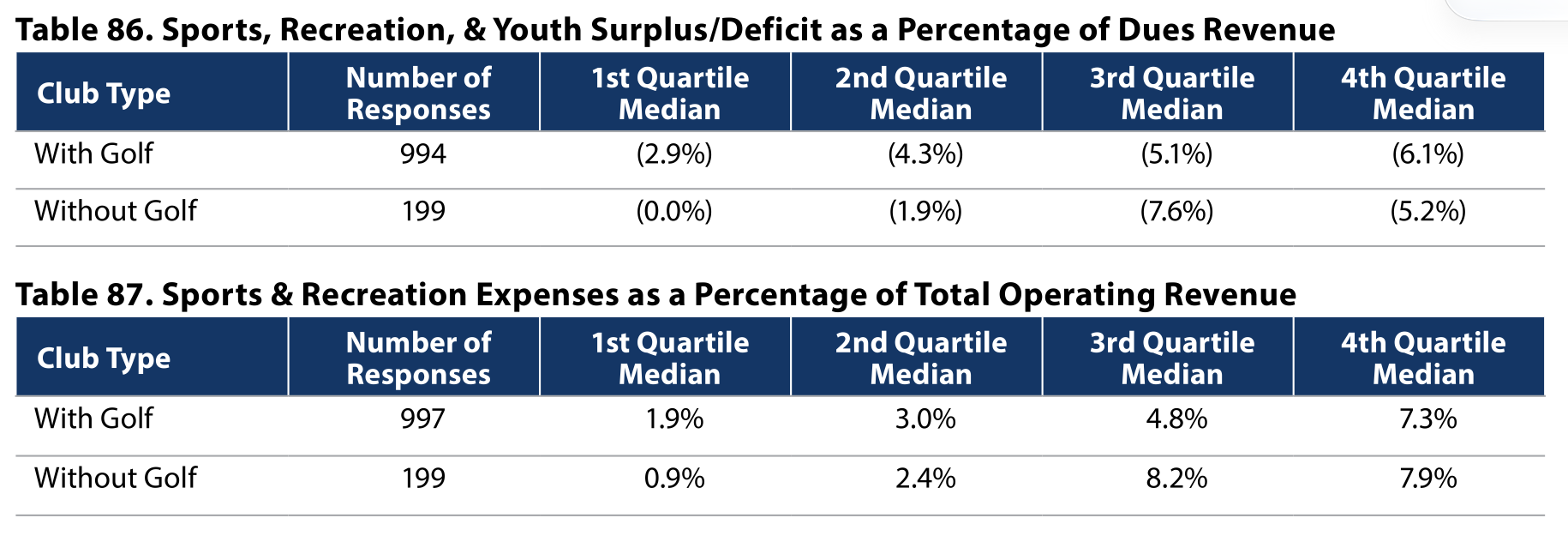
Tables 84 through 87 show metrics related to Sports & Recreation Programs. As with Food & Beverage (F&B), many of these programs run at higher deficits for larger clubs, who offer these services as amenities to members rather than try to operate them as profit centers.
Racquet Sports
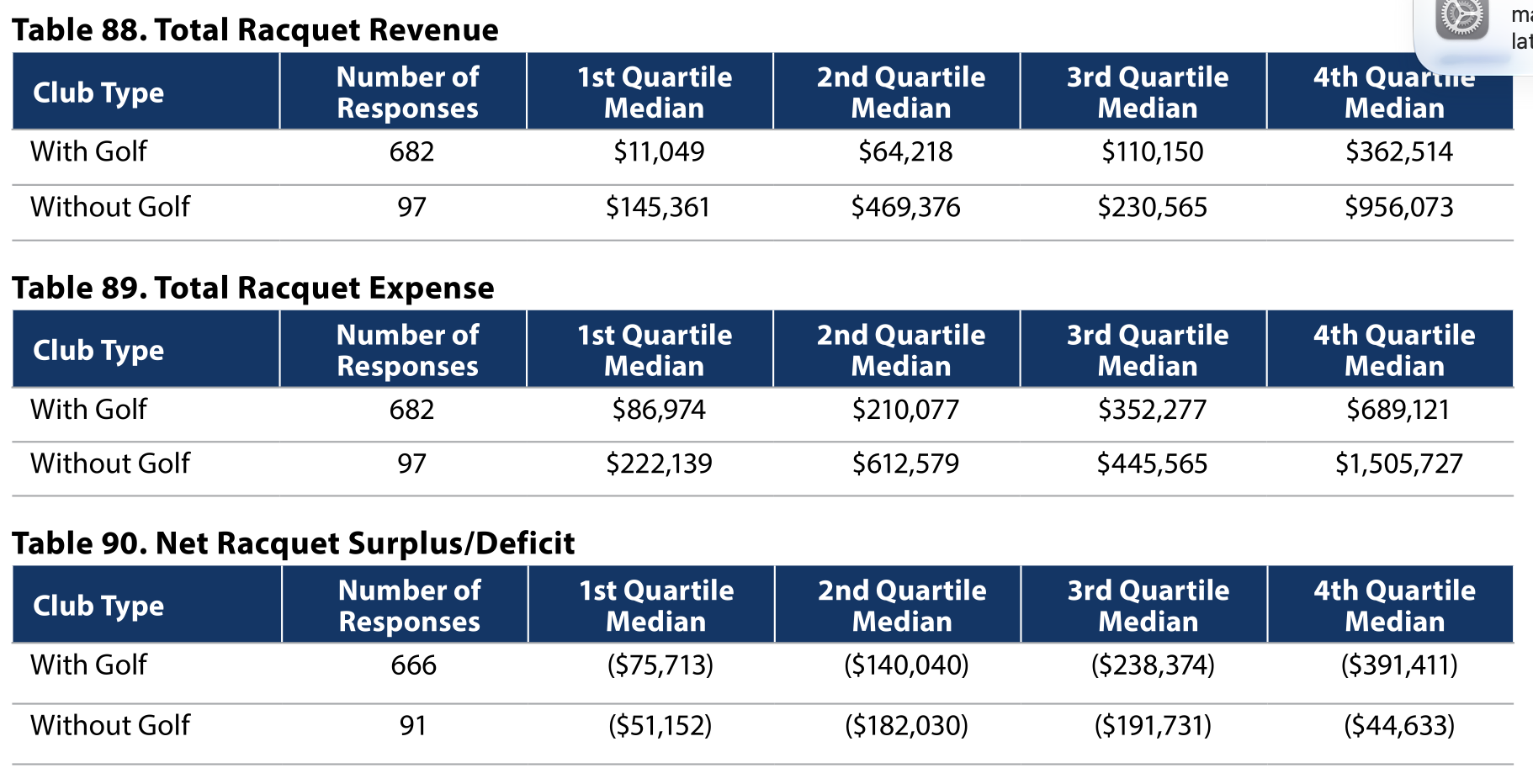
The revenue, costs, and activities of a tennis operation are more closely tied to the number of courts than to the club type or revenue size of the club. This can be applied more broadly to other departments in the club, but tennis specifically is most greatly impacted by this breakout. Tables 88 through 90 show the quartile breakdown of metrics pertaining to Racquets programs.
Aquatics
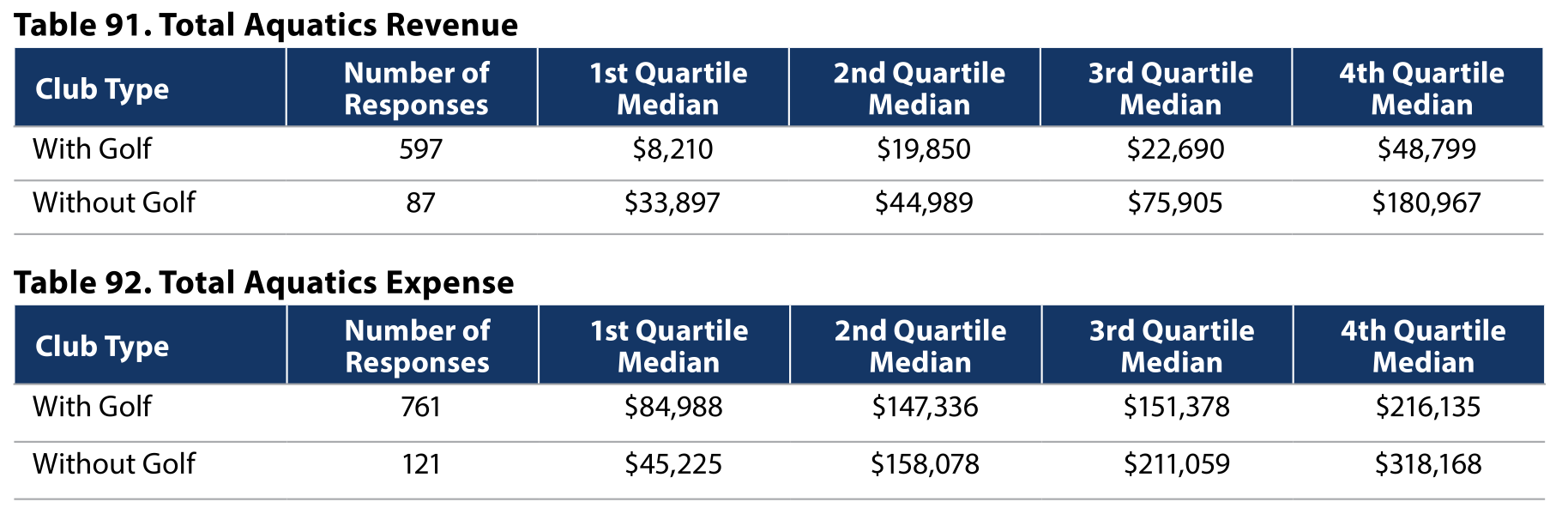
Tables 91 and 92 show the breakdown for key Aquatics metrics.
Fitness
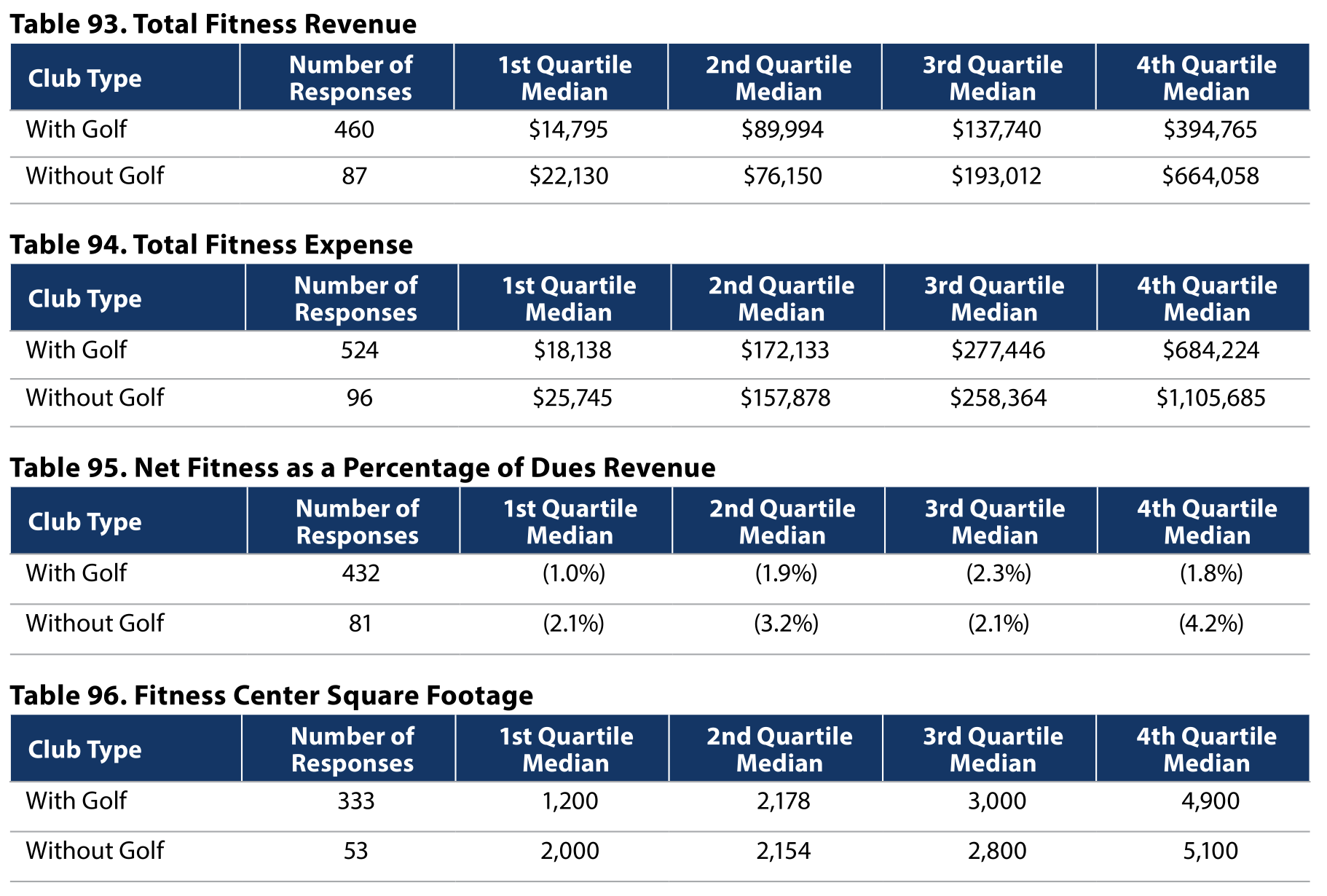
Tables 93 through 96 characterize the Fitness and Wellness program metrics.
Best Practices
Points of Focus
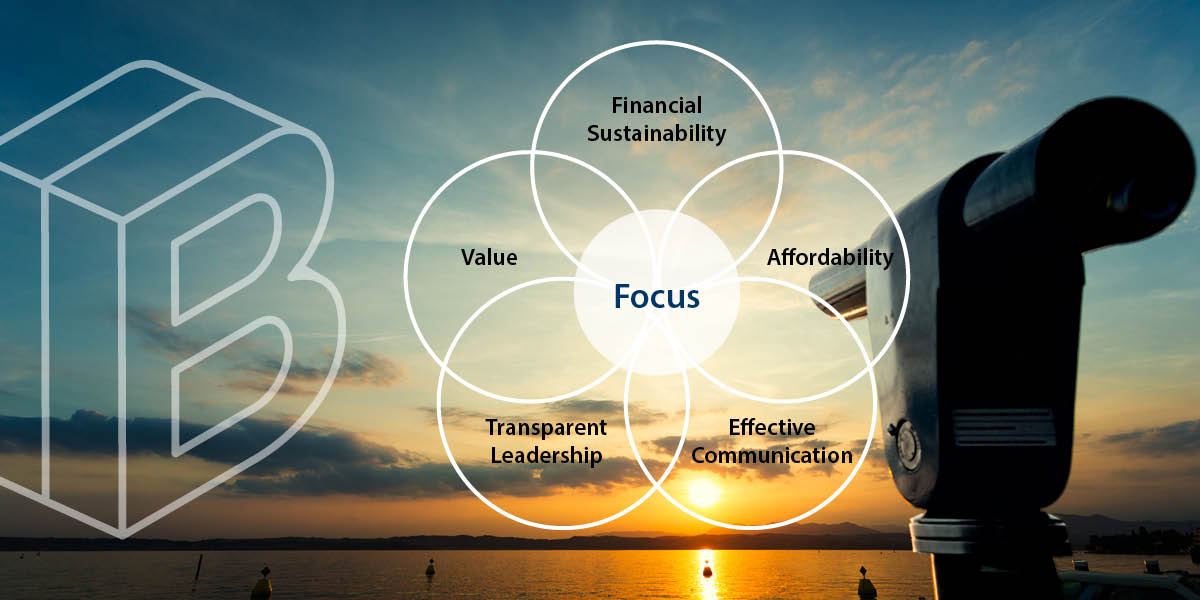
Five points of focus should be on every club manager’s to-do checklist whether he or she is responsible for the finest or most down-to-earth club. Club Boards are responsible for four overarching keys: finance, strategy, governance, and leadership while managers, the operators of clubs, are held accountable to manage resources, information, and anxiety.
Based on comments heard during focus groups, five member concerns should guide managers’ thinking when one considers the strategic priorities for the next five- or ten-year cycle:
- Affordability—As the global economy suffers its fits and throes, members see inflation and rising costs as primary concerns in their clubs. Coupled with the regeneration and Baby Boomers’ concerns with rising costs at their clubs alongside Generation X and Y inhabitants who are impatient to see their clubs making significant improvements, members are generally mindful of rising costs.
Focus member discussions on the steps your club takes to protect affordability.
- Value—While members see initiation fees (joining costs) and monthly dues rising, members are increasingly concerned with value. “I am paying more…show me where I am getting more from my membership.” Members are increasingly questioning their clubs’ value propositions.
Focus your members on little things they may overlook, such as free soft-serve ice cream for their children or grandchildren. Be generous when it does not burden your club’s operating model.
- Financial Sustainability—A recent study completed by GGA Partners shows that initiation fees have increased a combined 55.2 percent on average over the past five-year period. Monthly operating dues increases have averaged 25.5 percent over the past five years. Members question their own financial durability while absorbing these increases. They want to see that they are receiving greater value.
Focus your members on how joining fees being paid by new members enable their club to keep getting better.
- Transparent Leadership—One of the most voiced concerns in member focus groups is the desire for greater transparency from the Board of Directors. Club members are routinely skeptical of their boards and assume that more is happening than is being revealed by the board.
In some cases, the skepticism is justified because Board members too often violate boardroom confidentiality disciplines and discuss board deliberations with fellow members. In some cases, ordinary members of clubs fill communication gaps with their own versions of what must be taking place.
Focus your members on a reliable schedule and cadence of board communications… and stick to it!
- Effective Communications—Club Boards communicate inconsistently and ineffectively, overall. There is no organization or structure to Board communications and, in some cases, Boards intend to communicate well and fail to do so.
Develop an intentional approach to Board communications and brand the Board’s messaging to ensure that it does not get lost in routine club communications.
Managers cannot be everywhere at once so keeping focus on managing information and anxiety will certainly help.
Insights by Henry DeLozier, Partner, GGA Partners

External & Governmental Influences
EPA Publishes Supplemental Waters of the US Rule
In early September, the US Environmental Protection Agency (EPA) in conjunction with the US Department of the Army proposed a supplemental update to the Waters of the US rule. The EPA previously proposed changes to the rule in November 2025. After reviewing public comments and stakeholder feedback to that proposal, the EPA seeks to provide further clarity and certainty with this supplemental version on new regulatory alternatives.
The definition of what waters fall under the oversight of the federal government has fluctuated since 2015, creating ongoing confusion for clubs and other property owners and the federal permitting process administered by Army Corps of Engineers.
In this latest proposal to the WOTUS rule, the EPA seeks to modify key definitions for “relatively permanent” and “continuous surface connection,” and create a definition for “perennial.”
- “Perennial” would be defined as “having standing or continuously flowing water every day of the year during ordinary conditions” or “surface water flowing continuously year-round.”
- “Relatively permanent” waters would focus on those waters that are perennial (see above definition), with exceptions allowed for “anomalous event such as drought or dry spell or due to a non-anomalous event resulting in a temporary interruption for no more than 30 consecutive days in any given year.”
- “Continuous Surface Connection” means “surface water in a wetland that is continuously connected with the surface water in the jurisdictional water such that it is difficult to determine where the jurisdictional water ends and the wetlands begins.” A brief exception would be allowed like the definition of relatively permanent.
- Wetlands would only be jurisdictional under the oversight of the federal government when they “indistinguishably part of a traditional navigable water, the Territorial seas, a jurisdictional impoundment, or a jurisdictional tributary” and maintain continuous surface connection.
The EPA seeks to utilize the US Drought Monitor as a measurement tool for anomalous events like droughts and dry spells. This would replace the previously proposed concept of the “wet season” as identified as a measure of “relatively permanent” bodies of surface water. The “wet season” would have been determined by using the Web-based Water-Budget Interactive Modeling Program (WebWIMP).
CMAA and allies in the golf industry had previously noted in public comments that “golf course superintendents surveyed were not familiar with [this model] and more education and training and implementation practice would need to be provided.”
The EPA and Corps have requested public input on the supplemental proposal, and public comments will be accepted for 30 days. CMAA will join its allies on the Waters Advocacy Coalition and the great golf industry in official comments.

CMAA News & Announcements
Upcoming Virtual Education Opportunity
Great club governance doesn’t happen by accident—it’s driven by intentional action. It requires deliberate focus and consistent investment from the club executive and the Board of Directors. Your club’s efforts should begin with preparation and education.
CMAA’s Governance & Leadership Symposiums offer accessible, collaborative, virtual education for your Board of Directors and club executive. Explore important strategic governance topics built on the principles of:
- Informed Leadership
- Strategic Stewardship
- Empowered Management and Staff
- Compelling Member Experience
Access collaborative, virtual education for your Board of Directors and club executive. Attend from anywhere with an Internet connection.
Past attendees highly rate these sessions. John Wilkening, CCM, explains “The Governance & Leadership Symposium should be required education for all incoming Board members as well as any club management profession.”
Leave this symposium more informed and equipped with key takeaways for improving club governance.
The Symposium is presented in partnership with KOPPLIN KUEBLER & WALLACE, a CMAA Executive Partner.
